
Web portal development: customer, partner and staff portals
A portal by a Lead and a Senior with AI agents: 160 h × USD 55–60 + 160 h × USD 45–50 = USD 16,000–17,600 a month.
The example, line by line
| Role, hours and rate | Subtotal |
|---|---|
| Lead / architect160 h × USD 55–60 an hour | USD 8,800–9,600 |
| Senior engineer160 h × USD 45–50 an hour | USD 7,200–8,000 |
TotalUSD 16,000–17,600 2 people · 320 h | |
What is considered a web portal?
A web portal is a site behind a login that gives a defined group, such as customers, partners, citizens or staff, one place to see their own information and act on it: request, approve, track, upload. It differs from a public website because what each person sees depends on who they are and what their role allows.
We have built three kinds: a client portal for a govtech coordination product, a family portal with staff consoles for a housing platform, and a client portal with an admin console for an AI marketing platform.
How the price is built
You pay the published hourly rate for the hours worked, and a month is 160 hours. The sheet above prices a new portal: a Lead at USD 55–60 an hour and a Senior at USD 45–50, 160 hours each. It is an example, not a quote.
Two people instead of six holds when we have access from day one: the repositories, the environments, CI/CD, the cloud and one decision-maker. A portal inside a company with change boards, tickets and no production access takes five or six people and a timeline we state up front: a Lead, two Seniors and two Mids are USD 37,600–41,600 a month. There we sell delivery cadence, not fewer people.
Team size by situation
- A new product, with access from day one2 people · 1 monthUSD 16,000–17,600
- Evolving an existing product4 people · 1 monthUSD 30,400–33,600
- Behind change boards, tickets and no production access5 people · 1 monthUSD 37,600–41,600
What you get from a portal build
- Sign-in and roles, so customers, staff and administrators see their own views of the same data.
- A history of each request or change that nobody can edit, where the product needs one.
- Search across the portal and an import from your spreadsheets, as in our govtech portal.
- Integrations with the channels your users already use: in our housing platform, WhatsApp is tied to each case and a person can take over the conversation.
- Screens designed and approved in Figma before they are built, with accessibility checks on the critical flows.
- The portal's code and intellectual property are yours from day 1, and we sign an NDA before the call if you ask.
What we have shown, and what we have not
Every claim is on its case page with its dates. Strong means built end to end with figures; Partial means a smaller or weaker proof, stated as such.

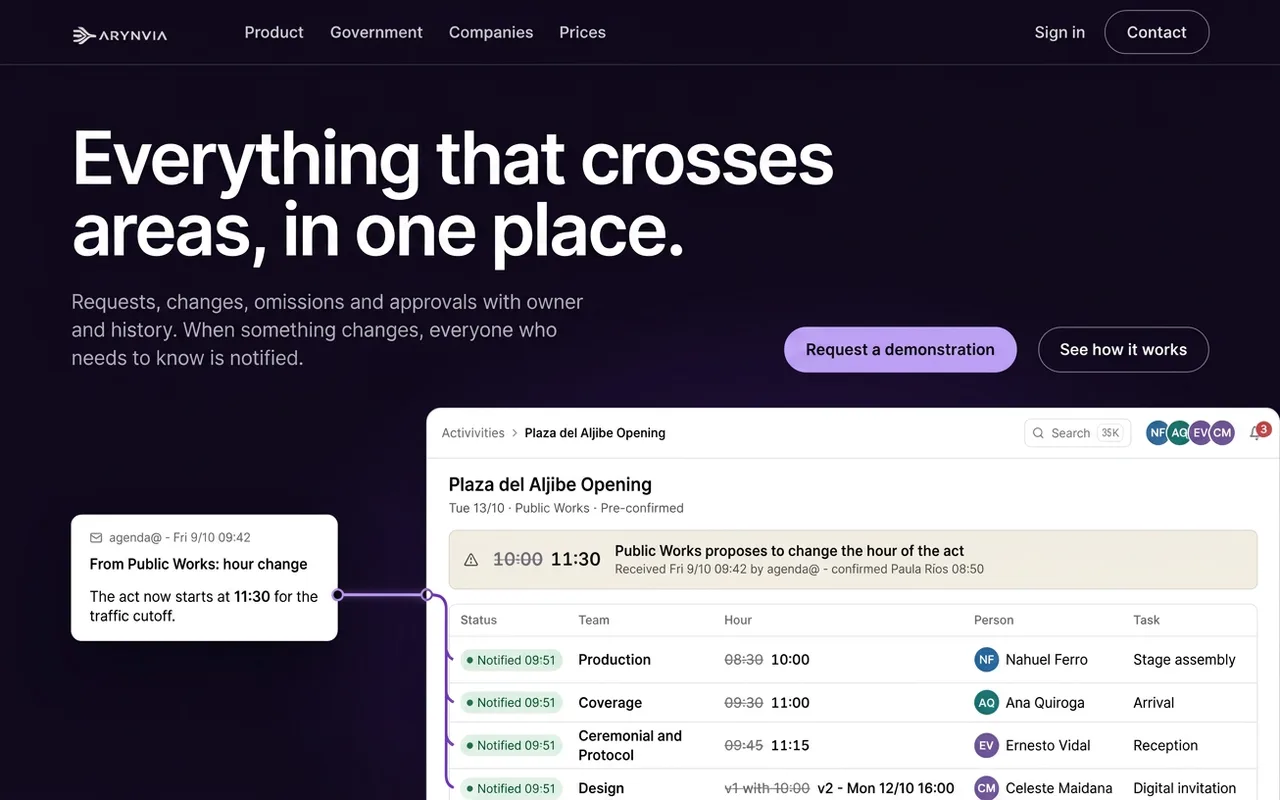
GovTech & enterprise coordination. Read the case
Strong A govtech client portal, in production in 20 days: 12 bounded contexts, passwordless sign-in and a history nobody can edit.
Not shown: No usage figures are published.

Housing & credit / PropTech. Read the case
Strong A family portal and staff consoles inside a housing platform, with about 290 approved frames across the public web, the portal and the consoles.
Not shown: We make no claim that families use it, nor about launch or revenue.


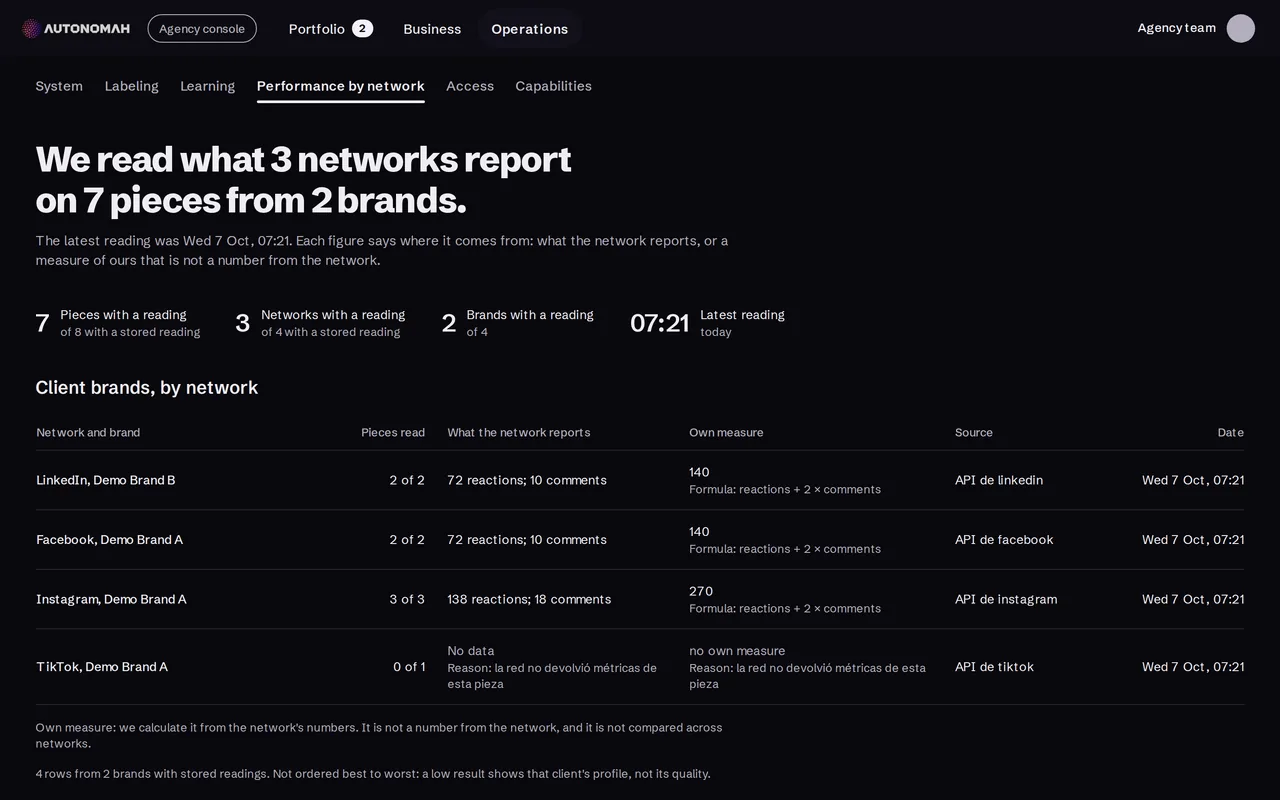
AI marketing / MarTech. Read the case
Strong A client portal and an admin console on an AI marketing platform, with portal routes checked with axe at 0 violations.
Not shown: No uptime, user or revenue figures are published.
Work we have not shown. Not in our published case studies: native mobile apps, e-commerce stores and modernization of legacy applications. We staff mobile work; for e-commerce and legacy rewrites, ask us before assuming.
The rates behind every example
Engineers and designers are priced on the same seniority table, per hour worked. Add or remove people as the work changes; the arithmetic stays the same.
How staff augmentation works- Lead / ArchitectUSD55–60per hour
- SeniorUSD45–50per hour
- MidUSD35–40per hour
- JuniorUSD30per hour
USD per hour, drawn to one scale
Other ways we build
- Custom software developmentExample: USD 16,000–17,600 · 1 month
- Web application developmentExample: USD 16,000–17,600 · 1 month
- Product design (UX/UI)Example: USD 8,960–9,920 · 1 month
Frequently asked questions
What is considered a web portal?
A site behind a login that gives customers, partners, citizens or staff one place to see their own information and act on it. What each person sees depends on who they are and what their role allows.
How much does it cost to build a customer portal?
You pay the published hourly rate for the hours worked. A Lead and a Senior for a 160-hour month cost USD 16,000–17,600. Inside a company with change boards and tickets, five people cost USD 37,600–41,600 a month. Every price here is an example, not a quote. If the scope is open, Discovery costs USD 7,000 first.
How much does it cost to hire a web developer for a portal?
A Senior engineer is USD 45–50 an hour, a Mid USD 35–40 and a Lead or Architect USD 55–60. 160 hours of a Senior is USD 7,200–8,000. Our engineers are in LATAM and work in English, Spanish or Portuguese.
Who owns the portal code?
You do, from day 1. We sign an NDA before the call if you ask.
Can you work inside our change process?
Yes. With change boards, tickets and no production access we accept the work and state a realistic timeline up front, with a bigger team. There we sell delivery cadence, not fewer people.
Is a portal different from a web application?
A portal is a web application whose point is giving a group of users their own view of shared data. The build is the same kind of work, so the same rates apply.
What happens after delivery?
A change of the same size swaps a backlog item at no cost. New scope is quoted at the published rate before it is done. Defects found within 30 days of delivery are fixed at no cost.
Tell us your case.
We reply to every request within 1 business day. We sign an NDA before the call if you ask.